Scattering Ashes in Kansas — A Complete Guide
Share
Everything Kansas families need to know about ash scattering laws, the Flint Hills, the Kansas and Arkansas Rivers, state parks, and verified cemetery cremation options across the Sunflower State.
Author's Note: I have never visited Kansas, but, of course, I reach all the way back to the iconic film of The Wizard of Oz. When I was a child, I could not imagine Kansas as anything but what was portrayed in that film. As an adult, I usually plan my visits around well-known restaurants, so my guess is that when I come to Kansas, I will be looking for some great barbecue!
If you are thinking of scattering ashes in the state of Kansas, it may be helpful to know the official symbols:
- State Flower: Sunflower 🌻
- State Tree: Cottonwood 🌳
- State Bird: Western Meadowlark 🐦
- State Gemstone: Jelinite 💎
- State Song: "Home on the Range" 🎶
- State Motto: "Ad Astra per Aspera" (To the Stars Through Difficulties) ⭐
Note: Jelinite — a rare form of amber formerly known as kansasite — was designated Kansas's official State Gemstone in 2018 (KSA § 73-3901), largely through the advocacy of Overland Park fourth-grader Casey Friend. Jelinite has been found only in Ellsworth County, Kansas, extracted from bedrock near the Smoky Hill River. Kansas also designates Greenhorn Limestone as its State Rock (2018), Galena as its State Mineral (2018), and Channel Catfish as its State Fish (2018) — all products of the same successful legislative effort by Casey Friend. Kansas has no officially designated State River. The Kansas River — the "Kaw" — is one of the state's most iconic waterways and appears throughout Kansas history and culture, but it has never been enacted as a state symbol by the Kansas Legislature. The complete Kansas Historical Society chronological list of state symbols contains no river designation.
How Prevalent Is Ash Scattering in Kansas?
The practice of scattering ashes has grown steadily in Kansas, reflecting national trends toward cremation and personalized memorials. In 2020, the cremation rate in Kansas was approximately 55%, and it continues to rise. As more Kansas families choose cremation, many are looking for meaningful settings in which to honor their loved ones.
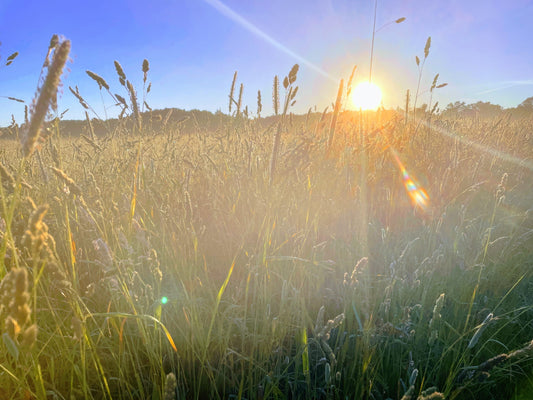
Kansas offers an extraordinary range of landscapes for those seeking a meaningful farewell ceremony. The Flint Hills — the largest remaining tract of tallgrass prairie in North America — stretch across the eastern third of Kansas in breathtaking rolling waves of bluestem grass, dotted with limestone outcroppings and roamed by bison at the Tallgrass Prairie National Preserve near Strong City. The Smoky Hills of north-central Kansas rise dramatically from the plains, their chalky buttes and canyon walls exposing the limestone and chalk formations of the ancient Western Interior Seaway — the same geological layer that yields Kansas's rare jelinite amber in Ellsworth County. Monument Rocks and Castle Rock — isolated chalk monoliths rising from the High Plains in western Kansas — are among the most striking natural landmarks in the Great Plains. The Arkansas River (pronounced "ar-KAN-zus" in Kansas) threads through the southern part of the state and once carried the Santa Fe Trail along its banks; Dodge City and Great Bend grew on its floodplain. Milford Lake — Kansas's largest reservoir — and Cheney Reservoir in south-central Kansas offer open water settings for family ceremonies. The Kansas River (the "Kaw") winds from Junction City through Manhattan, Lawrence, and Topeka before joining the Missouri River at Kansas City.
Kansas Laws on Scattering Ashes
Kansas is one of the most permissive states in the country regarding ash scattering. Key provisions:
- No state restrictions on scattering location: In Kansas, there are no state laws controlling where you may keep or scatter ashes. This means Kansas families have broad flexibility in choosing scattering locations.
- Coroner's permit required before cremation: Kan. Stat. § 65-2426a requires a coroner's cremation authorization permit before any cremation may occur.
- Death certificate: Kan. Stat. § 65-2412 requires a death certificate to be filed with the state registrar within 3 days of death and before final disposition.
- Embalming or refrigeration: A body may be interred or cremated without embalming if disposition occurs within 24 hours. Beyond 24 hours, embalming or refrigeration is required unless a religious or health exemption applies.
- Private property: The Kansas Board of Mortuary Arts recommends asking landowner permission before scattering on property you don't own. On your own private property, no restriction applies.
- Public land: While Kansas has no state law restricting public scattering, contacting the relevant managing authority is always advisable before any ceremony on state parks, federal lands, or municipal parks.
Rules by location type:
- Your own private property: No restriction under Kansas law.
- Someone else's private property: The Board of Mortuary Arts recommends requesting permission from the landowner.
- Kansas State Parks (Tallgrass Prairie National Preserve, Cheney Reservoir, Milford Lake, etc.): Contact the Kansas Department of Wildlife & Parks at (620) 672-5911 or ksoutdoors.com before any ceremony. Federal lands like Tallgrass Prairie National Preserve require NPS coordination — contact the preserve at (620) 273-8494.
- Kansas River, Arkansas River, and other waterways: Kansas has no law restricting waterway scattering. The federal Clean Water Act governs all navigable waters. Practice common sense — scatter away from populated shorelines and water intakes.
- At sea: The federal Clean Water Act requires scattering at least 3 nautical miles from shore. EPA notification is required within 30 days of any ocean scattering.
- Aerial scattering: No Kansas state law restricts aerial scattering. Federal aviation regulations (14 CFR 91.15) apply — ashes must be removed from any container before release.
Cemetery Cremation Options in Kansas
Mount Hope Cemetery & Funeral Chapel — Topeka (Northeast Kansas)
Location: 4700 SW 17th Street, Topeka, KS 66604 Phone: (785) 272-1122
Mount Hope Cemetery is one of Topeka's most distinguished historic cemeteries — a 120-acre perpetual care cemetery established in 1906 by Albe and Kate Whiting, who envisioned it as a beautiful final resting place for Topekans. They brought their vision to life with famed landscape architect E.F.A. Reinisch, who also designed Topeka's Gage Park Rose Garden. The Whitings chartered the cemetery for one thousand years, dedicating all income to perpetual maintenance and the support of local institutions including Washburn College, the YWCA, and the YMCA of Topeka — from which no individual can profit.
Spanning 30 beautifully landscaped memorial gardens, a large mausoleum complex, and two chapels, Mount Hope offers a comprehensive range of cremation memorialization options. The Garden of Prayer in the southwest corner features in-ground cremation memorials (cremorials) for individuals and companions, each marked with a bronze marker on Sunrise Pink granite and including a bronze flower vase. The Good Shepherd Columbarium in the Sunrise memorial garden on the east side offers outdoor niches. A community ossuary inside the Rose Garden provides an economical option for memorialization, with names added to a memorial plaque. The cemetery also maintains dedicated veterans sections with Memorial Day flag placements by Topeka ROTC members. Mount Hope is backed by over $1 million in care funds ensuring it will be preserved for generations. Contact (785) 272-1122 to inquire about all cremation options including any scattering arrangements.
Website: mounthopetopeka.com
Resurrection Catholic Cemetery — Wichita (South-Central Kansas)
⚠️ Important Note on Scattering: Resurrection Catholic Cemetery, as a consecrated Catholic Diocese of Wichita cemetery, follows Catholic Church teaching that the scattering of cremated remains is not in keeping with the respect owed to the deceased. Only burial in the ground or placement in a columbarium niche is offered. Resurrection Cemetery is listed here as a cremation memorialization option — not a scattering garden.
Resurrection Catholic Cemetery is a consecrated Catholic Diocese of Wichita cemetery serving the Catholic community and all families seeking a sacred setting for interment. As one of the Catholic Cemeteries of Wichita — alongside Calvary Cemetery, Wichita's oldest Catholic cemetery consecrated in 1882 — Resurrection offers traditional burial plots, columbarium niches, and mausoleum entombment. The Catholic Cemeteries of Wichita describe their grounds as "consecrated ground set aside as a resting place for our deceased brothers and sisters awaiting the final resurrection when Jesus Christ will come again in all His splendor and glory."
For families seeking cremation memorialization within the Catholic tradition, the cemetery offers columbarium niches. Contact the Catholic Cemeteries of Wichita directly to discuss available options.
Website: catholiccemeterieswichita.org
Maple Hill Funeral Home & Cemetery — Kansas City, KS (Northeast Kansas)
Location: 600 N. 19th Street, Kansas City, KS 66102 Phone: (913) 621-4526
Maple Hill Cemetery in Kansas City, Kansas traces its origins to 1865, when it was established as Arlington Cemetery for Union soldiers, making it one of the older cemetery grounds in northeastern Kansas. Today, Maple Hill Funeral Home & Cemetery is a full-service funeral home and cemetery offering rolling green lawns, majestic evergreen trees, and a dedicated cremation garden. Their outdoor cremation garden, landscaped with trees, a flowing water feature, and beautiful flower beds, provides in-ground cremation burial lots accommodating two urns each, memorialized with flush bronze markers. Cremation niches are also available in the mausoleum. The cemetery also offers bench, tree, and statue memorial interment options.
Contact Maple Hill at (913) 621-4526 to inquire about cremation garden availability and any scattering arrangements.
Website: maplehillfuneralhome.com
Are There Mail-In Options for Ash Scattering Services?
Yes. Kansas families — or families anywhere honoring a loved one — may choose Farmstead Scattering Garden in Cambridge Springs, Pennsylvania. Cremated remains are mailed directly to the working farm, where they are scattered respectfully according to the family's chosen preferences. No travel required.
Visit our service page at farmsteadscattering.com/collections/services, or call or text us at (814) 450-5432 to learn more.
Frequently Asked Questions About Scattering Ashes in Kansas
Is it legal to scatter ashes in Kansas?
Yes — Kansas is one of the most permissive states in the country. There are no Kansas state laws restricting where ashes may be scattered. Common-sense guidelines apply: obtain landowner permission for private property, and contact the relevant managing authority for state parks or federal lands before any ceremony.
Can I scatter ashes anywhere in Kansas without a permit?
State law places no restrictions on scattering locations, but individual parks, preserves, and managing agencies may have their own guidelines. Contact the Kansas Department of Wildlife & Parks at (620) 672-5911 for state park guidance, and any federal land managers for land under their jurisdiction.
Does Kansas have a State River?
No. The Kansas Historical Society's complete chronological list of state symbols — from 1861 through the present — contains no state river designation. The Kansas River (the "Kaw") is deeply important to the state's history and identity, but it has never been designated an official state symbol by the Kansas Legislature.
What is Jelinite and why is it Kansas's State Gemstone?
Jelinite is a rare form of fossil amber — formerly called kansasite — found only in Ellsworth County, Kansas, extracted from bedrock near the Smoky Hill River. It was designated Kansas's official State Gemstone in 2018 (KSA § 73-3901) through the advocacy of Overland Park fourth-grader Casey Friend, who also spearheaded the successful passage of a State Rock (Greenhorn Limestone), State Mineral (Galena), and State Fish (Channel Catfish) in the same legislative effort.
Does Resurrection Catholic Cemetery in Wichita offer ash scattering?
No. Catholic diocese cemeteries follow Catholic Church teaching that scattering of cremated remains is not in keeping with proper respect for the deceased. Resurrection Catholic Cemetery offers columbarium niches and burial options only. Kansas families seeking a scattering garden should contact other area cemeteries or consider Farmstead Scattering Garden's mail-in service.
Can I scatter ashes along the Flint Hills or in the tallgrass prairie?
The Tallgrass Prairie National Preserve near Strong City is federally managed by the National Park Service. A Special Use Permit or letter of authorization is required for scattering at NPS sites (36 CFR 2.62). Contact the Tallgrass Prairie National Preserve at (620) 273-8494 before any ceremony. For privately owned Flint Hills grassland, contact the landowner for permission.
Can I scatter ashes in the Kansas River or Arkansas River?
Kansas has no state law restricting waterway scattering. The federal Clean Water Act governs all navigable waters. Practice common sense — scatter away from populated shorelines, public water intakes, and developed recreation areas.
What is required before cremation in Kansas?
A coroner's cremation authorization permit is required before any cremation (Kan. Stat. § 65-2426a), and a death certificate must be filed within 3 days of death. Embalming or refrigeration is required if final disposition won't occur within 24 hours (with exceptions for religious beliefs and public health).
Can I mail ashes for scattering from Kansas?
Yes. Cremated remains may be mailed within the United States via the U.S. Postal Service using Priority Mail Express. Farmstead Scattering Garden in Cambridge Springs, Pennsylvania accepts mail-in remains for private farm scattering. Call or text (814) 450-5432 or visit farmsteadscattering.com.
What is the history behind "Home on the Range"?
"Home on the Range" was adopted as Kansas's official state song in 1947. The lyrics were written by Brewster Higley, a Kansas homesteader, around 1872 — originally published as a poem called "My Western Home." The melody was composed by Daniel Kelley. The song became one of the most iconic of all American folk songs and was reportedly President Franklin D. Roosevelt's favorite song.
Legal and Regulatory References
- KSA § 65-2426a — Coroner's Cremation Permit Requirement
- KSA § 65-2412 — Death Certificate — 3-Day Filing Requirement
- KSA § 65-1762 — Crematory Operator License; Cremation Requirements
- KSA § 73-3901 — Official State Gemstone (Jelinite)
- Kansas Board of Mortuary Arts — ksbma.ks.gov | (785) 296-3980
- Kansas Department of Wildlife & Parks — ksoutdoors.com | (620) 672-5911
- Tallgrass Prairie National Preserve — nps.gov/tapr | (620) 273-8494
- U.S. EPA — Burial at Sea — epa.gov/ocean-dumping/burial-sea